
2x2 Prioritization Matrix
What is a 2x2 Prioritization matrix?
The 2x2 prioritization method gives professionals and teams a visual framework to identify which projects to work on next. The method consists of drawing a priority matrix grid with four quadrants. The vertical axis is labeled “importance,” and the horizontal is labeled “effort.” Each quadrant in this grid, sometimes called a “4 square,” will have one of the following labels:1. High value, low effort2. Low value, low effort3. High value, high effort4. low value, high effortThe team then places each backlog project or task on the graph in the appropriate spot, according to the item’s estimated value and the effort required to complete it. When they examine their completed 2x2 grid, the team has a clear idea of what to focus on and in what order.
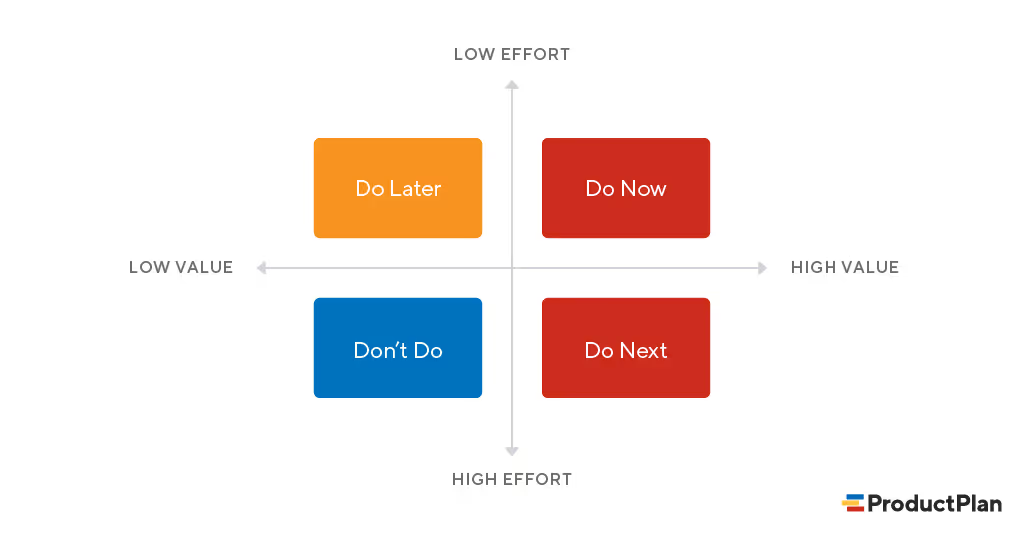
Why is the 2x2 Priority Matrix Lean?
The 2x2 prioritization approach follows several of the principles popularized by lean software development. For example, by using the 2x2 matrix, businesses can:
- Deliver fast. Reducing the amount of work in progress (WIP) allows businesses to practice the lean principle of “deliver fast.” Using this 4 square model, the team can focus its time and resources only on items that will generate value to the customer and require relatively low effort. This will help the team bring products to market more quickly and frequently.
- Eliminate waste. Another lean principle the 2x2 model supports is the concept of eliminating waste. Plotting all projects and tasks on this graph helps give clarity about which features or enhancements a customer would actually pay for. This will make it easier for the team to de-emphasize or eliminate ideas that are unlikely to bring in new customers or increase existing user loyalty.
Who Can Use this 4 Square Matrix?
Agile development teams use the 2x2 prioritization approach to determine which features, fixes, and enhancements to work on next.An agile product team can use this approach to identify the limited features needed for a minimum viable product (MVP). They can also use this method to prioritize tasks for each upcoming agile sprint.
But professional teams and individuals in any role can modify this 4 square method to prioritize all types of projects or tasks. The 2x2 method can help teams determine, for example:
- Markets worth pursuing, and in what order
- Types of advertising campaigns to invest in
- Employees to hire next
Another popular version of the 2x2 prioritization framework is the Eisenhower Matrix. Named for its developer, President Dwight Eisenhower, this 2x2 grid is designed to help people manage their time more effectively. Users plot their to-do items on the grid based on each item’s importance and urgency. The 4 squares are labeled this way:1. High importance, high urgency2. High importance, low urgency3. Low importance, high urgency4. Low importance, low urgency
An Example of a 2x2 Priority Matrix:
To see how the 2x2 prioritization model works in practice, imagine a software product team that wants to shift the pricing of its app to a subscription model.The team is evaluating all of the work it will need to complete to allow customers to sign up for a subscription without speaking with anyone at the company. Here are a few of the projects they’ve identified so far:
- Build an integration with a subscription platform
- Design and mock-up customer journey (from pre-trial through post-purchase nurturing)
- Enable international purchase with different currency
Here is how the team plots these items on its 2x2 priority matrix:
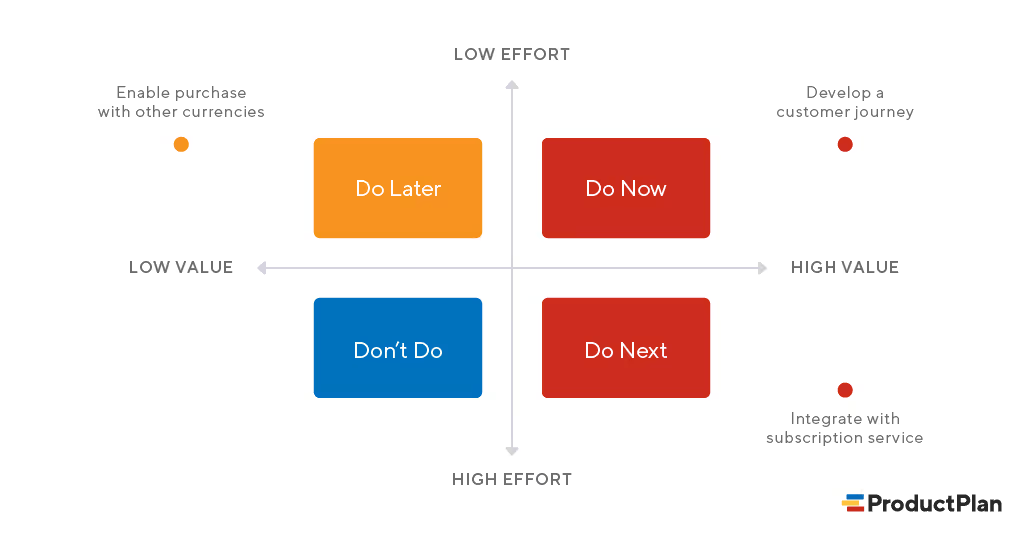
The team determined that developing the customer journey will be a high-value undertaking that will require minimal effort. After plotting it on their 2x2 grid, they can see this is the task to focus on first.Integrating with a subscription platform also exhibits high value but will require a lot of effort. That places this task in the “Do it next” quadrant. They will work on it after they’ve designed and mocked up the entire user journey.Finally, the team realized a small percentage of their users are in other countries. That means they will need to enable international purchases using different currencies. But because this is a low-value task, they will place it lower on their priority list.Want to learn more about prioritizing your team’s work?
Your next roadmap starts here.

.svg)

.svg)